Introduction
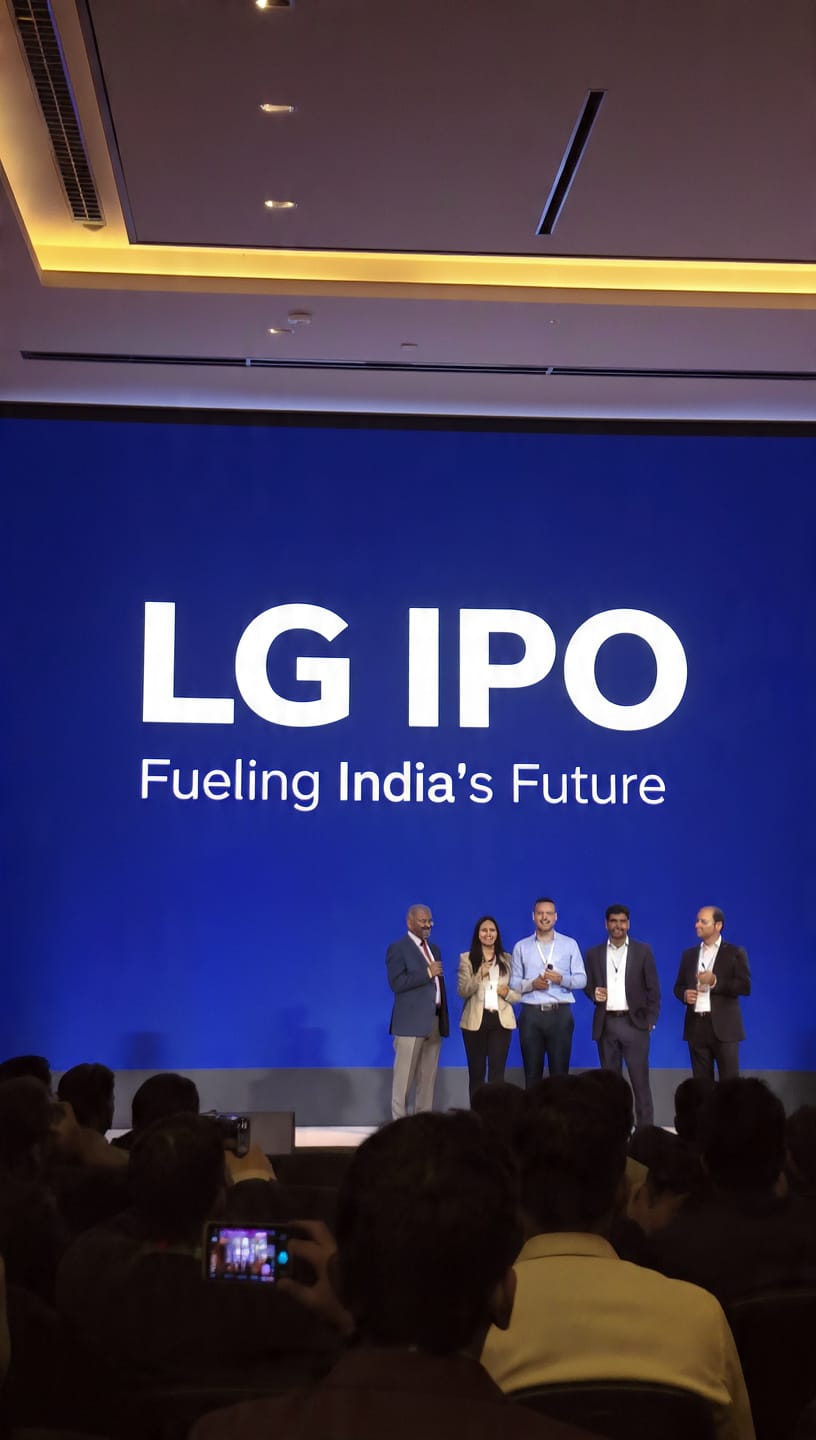
The day has come: on 14 October 2025, LG Electronics’ Indian arm is set to make its stock market debut after raising funds and attention during its IPO process. For investors, analysts, and the broader electronics / consumer goods industry, this is more than just another listing — it’s a statement of LG’s ambitions in the Indian market and a test of investor confidence.
This post walks through the lead-up to the IPO, the structure and key metrics, the risks and rewards, and what to watch in the days following the listing.
Background & Lead-up
Why India, and why now?
LG has been aggressively expanding its footprint in India for years, manufacturing and distributing home appliances and consumer electronics. India is a key growth market with rising incomes, urbanization, and consumer demand for durable goods.
To support future expansion and gain more visibility, LG’s parent decided to list its Indian subsidiary on domestic stock exchanges.
However, the path was not smooth:
- Earlier in 2025, market volatility and global macro pressures caused LG to delay or pause IPO plans.
- LG forged ahead with infrastructure expansion—such as a new ₹600 million manufacturing plant in Andhra Pradesh—to underline its long-term commitment to India.Regulatory approval came through: LG filed its draft red herring prospectus (DRHP) in December 2024, and SEBI cleared the IPO in March 2025.
- The IPO window opened in October, banking on improving market sentiment
Given that LG is already a familiar consumer brand in India, the IPO also doubles as a branding and visibility exercise in the equity markets.
IPO Structure & Key Metrics
Offer for Sale (OFS)
One critical point: this IPO is a pure Offer-for-Sale (OFS). That means LG India is not issuing fresh shares; instead, the parent company (LG Electronics Inc) is selling part of its stake. Thus, the IPO proceeds go to the promoter / current shareholder, not to LG India itself.Size, Price Band & Valuation
- The IPO is pegged at roughly ₹11,600 to ₹15,000 crore depending on media estimates.The price band is set around ₹1,080 to ₹1,140 per share.
- The equity being sold amounts to about 10.18 crore shares, which is roughly a 15% stake in LG India.
- Post-IPO, the Korean parent is expected to retain around 85% ownership.
- Subscription & Anchor Investors
- LG sought anchor investors ahead of the public offering
- On Day 1, the IPO got fully subscribed, with retail investors placing strong bids.
- The broader subscription skyrocketed — reports indicate it was oversubscribed roughly 54 times, with aggregate bids in the realm of ₹4.4 trillion (~$50 billion) — making it one of the most in-demand IPOs in recent Indian capital market history.
- Institutional investor participation was especially strong, reflecting high confidence from large funds.
Allotment & Listing
- The allotment has been completed, and many observers expect listing gains.
- Shares will be listed on both BSE and NSE on 14 October 2025, the date you asked about.
Risks, Challenges & Red‑Flags
While the IPO buzz is undeniably strong, there are several risks that prospective investors and market watchers must keep in mind:
- Tax, royalty & related-party concerns
Governance advisory firm InGovern flagged potential liabilities amounting to ~₹4,717 crore, including disputed taxes, royalty payments, and opaque related-party transactions. These could eat into profits or require provision if adverse rulings arrive. - High promoter retention & governance
With the promoter holding ~85% post-listing, minority shareholder influence is limited. Some critics argue this could tilt decision-making in favor of the parent, possibly at the expense of minority shareholders. - No capital infusion into the company
Because this is a pure OFS, LG India itself does not receive any fresh capital. That means growth plans will rely on internal cash flows or external borrowings, not the IPO proceeds. - Valuation expectations & market pricing
The IPO pricing and investor expectations are ambitious. If the performance post-listing doesn’t match the hype, the stock could face pressure.
Also, grey market premium (GMP) trends may overstate actual listing performance. Macro & market risks
Broader market volatility (domestic or global), interest rates, currency fluctuations, inflation, and regulatory shifts in India or South Korea could all weigh on the stock.
Earlier, LG postponed IPO plans due to unfavorable market conditions.
What to Watch After Listing (14 October Onwards)
- Listing premium or discount: Will LG debut above the issue price (as many expect)? The size of that premium will set the tone.
- First quarterly results post-IPO: They’ll be scrutinized for growth vs. expectations, especially given concerns about liabilities.
- Parent-subsidiary transactions: Given high promoter stake, watch for intercompany deals or royalty structures.
- Stock liquidity: How much trading volume develops, which helps in price discovery and investor confidence.
- Investor behavior: Will early investors (especially retail) hold or flip? Market trends may influence this.
Conclusion
The IPO listing of LG Electronics India on 14 October 2025 represents a landmark event — not just for LG, but for the broader consumer electronics and capital markets in India. The hype is real, backed by strong subscription numbers and institutional interest, but risks remain.
Whether LG delivers as per expectations or succumbs to post-listing pressure will depend on execution, governance clarity, and macro stability. For investors, this is a fascinating entry point — but one that demands careful risk assessment.
About the Author