In life, as in sport, it’s not about how many times you fall. It’s about whether you get back up.
And some athletes don’t just get back up—they come back stronger, smarter, and more determined than ever. These are the stories that give us goosebumps, bring tears to our eyes, and remind us why sports are more than just games. They’re stories of grit, healing, second chances, and unshakable belief.
Here are some of the most powerful sports comebacks that prove greatness isn’t born—it’s built in the darkest, hardest moments.
1. Kimi Raikkonen – Out of F1, Back on Top
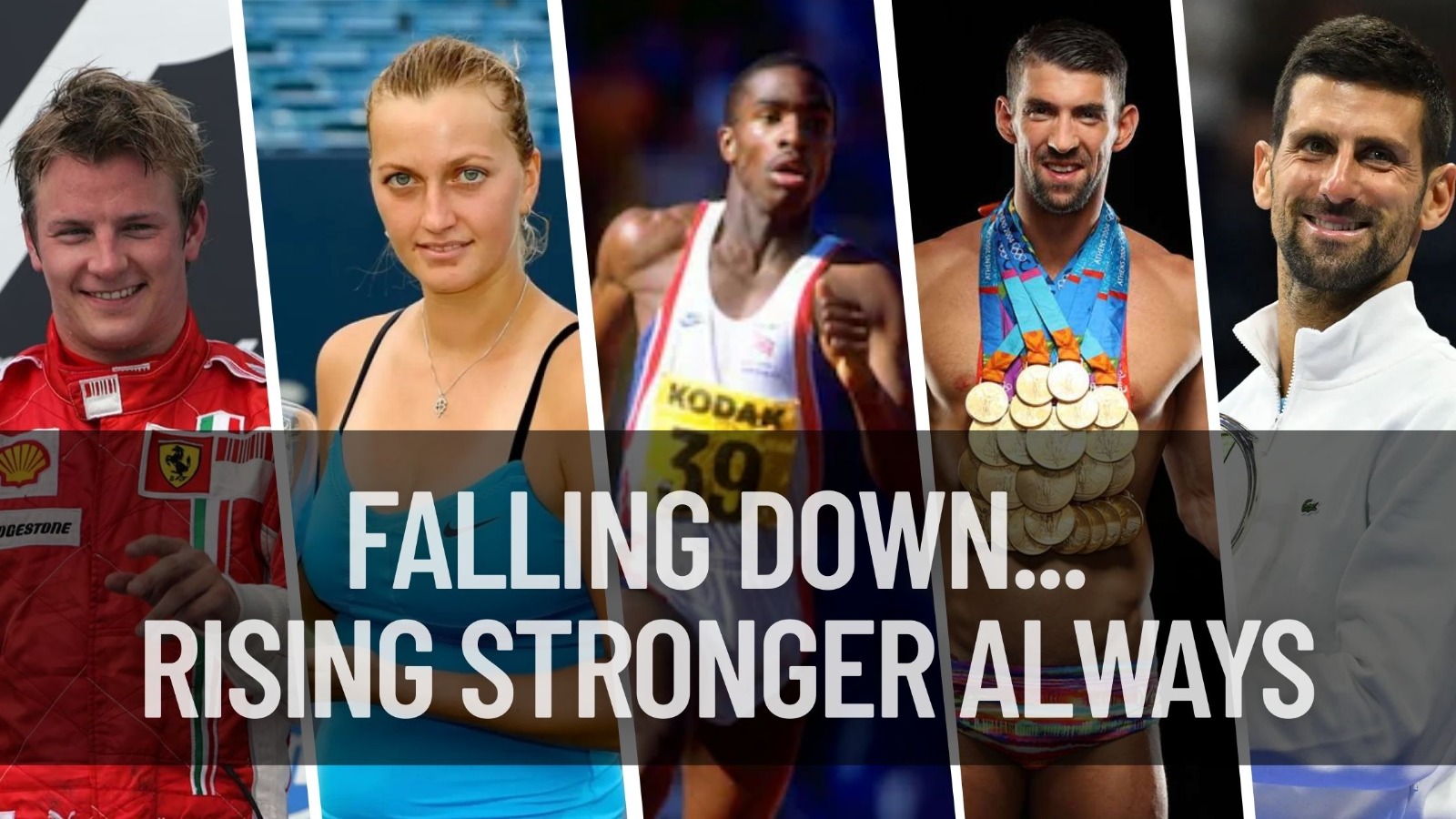
After leaving Formula 1 in 2009, many believed Finnish driver Kimi Raikkonen was done. He spent two seasons away from the sport—racing in rallies and even dabbling in NASCAR. But in 2012, Kimi returned to Formula 1 with Lotus.
Critics were skeptical. Yet within months, he reminded the world who he was—with podium finishes and a race win in Abu Dhabi. His comeback wasn’t loud, but it was commanding. Cool, quiet, and relentless—just like Kimi.
2. Petra Kvitová – From Knife Attack to Wimbledon Finalist
In 2016, tennis star Petra Kvitová suffered a terrifying knife attack during a home invasion. She sustained severe injuries to her playing hand, and doctors weren’t sure she’d ever hold a racquet again—let alone compete at a professional level.
But less than six months later, Petra made her comeback. By 2019, she had reached the Wimbledon final, and in 2023, she returned to the top 10 rankings. Her resilience is a masterclass in courage and healing.
3. Derek Redmond – Finishing the Race His Way (1992 Olympics)
This wasn’t a comeback over a season—it happened in one unforgettable moment.
At the 1992 Barcelona Olympics, British sprinter Derek Redmond tore his hamstring mid-race. His Olympic dream was over. But instead of stopping, he got up and hobbled toward the finish line in agony.
Then, from the stands, his father ran onto the track, put his arm around his son, and helped him cross the finish line.
No gold medal. No podium.
Just heart, family, and a moment etched in Olympic history.
4. Michael Phelps – Swimming Out of Depression
Known as the most decorated Olympian of all time, Michael Phelps seemed untouchable in the pool. But outside of competition, he faced deep mental health struggles, including depression and suicidal thoughts after the 2012 Olympics.
He entered rehab, stepped away from swimming, and faced his demons. Then, in 2016, Phelps returned—not just to compete, but to lead. He won five more gold medals in Rio, becoming a voice for mental health in sport.
His greatest victory wasn’t measured in seconds—it was the battle he won in silence.
5. Novak Djokovic – From Elbow Surgery to Career Grand Slam
In 2017, Novak Djokovic suffered a serious elbow injury that derailed his career. Many speculated that his best years were behind him. But in 2018, he returned with new energy, winning Wimbledon and completing a career Grand Slam by claiming all four major titles again.
Djokovic’s return wasn’t just about recovery—it was about transformation. He rebuilt not only his body but his game, mindset, and belief system.
The Takeaway: What Comebacks Teach Us
Comebacks are rarely smooth. They’re messy, painful, and slow. They require self-doubt, discipline, and often a complete reinvention. But that’s exactly why they matter.
These athletes didn’t just return to their sports—they came back better. Wiser. Stronger. They showed us that champions aren’t made when everything’s going right. They’re forged in failure.
Final Words: Your Own Comeback Story
You don’t need to be an elite athlete to stage a comeback. Whether you’ve faced rejection, burnout, injury, heartbreak, or failure—your story isn’t over. Not even close.
Let these athletes be your reminder:
Falling is part of the process.
Rising is where the magic happens.
The world loves a comeback story. Now it’s your turn to write one.
About the Author