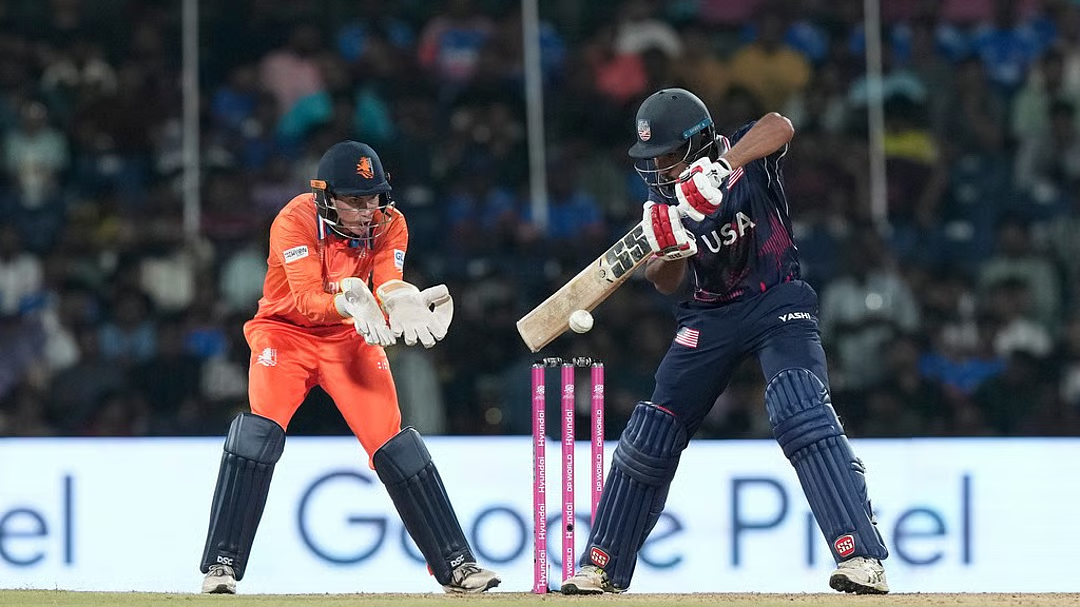
Cricket lovers around the world were treated to an exhilarating spectacle when the United States and Netherlands met in Group A action of the ICC Men’s T20 World Cup 2026 at the MA Chidambaram Stadium in Chennai on February 13, 2026. This encounter, steeped in history, ambition, and tension, highlighted both teams’ contrasting journeys in the tournament and the wider growth of cricket beyond its traditional strongholds.
A Clash Beyond the Scoreboard
While the names USA and Netherlands may not yet carry the same gravitas as India, Australia, or England, matches like this show how far the Associate nations have come. For the Netherlands, this game was an opportunity to solidify their reputation as one of the strongest Associate teams in world cricket — and extend their unbeaten head-to-head record against the USA in T20Is. The Dutch had already beaten the USA three times in T20 internationals, a psychological advantage that added intrigue to the matchup.
On the other side, the United States entered the fixture needing a vital win to keep their hopes of advancing to the Super Eights alive. Despite a mixed tournament so far — including defeats to India and Pakistan — the Americans showed promise in phases, particularly with their disciplined bowling and moments of explosive batting.
USA’s Batting Brilliance Sets the Tone
Asked to bat first after the Netherlands won the toss and chose to field, the USA put together one of their most impressive batting displays of the tournament. With an aggressive approach from the outset, they posted a competitive total of 196 for 6 in their 20 overs — a score that reflected both power and tactical depth.
Standout contributions came from players like Shubham Ranjane, who anchored the innings with a brisk half-century, showing intent and maturity under pressure. His 48* off 24 balls turned the innings in the USA’s favour, giving them significant momentum in the middle overs.
This total was more than just numbers on a board — it was symbolic of American cricket’s growth: a team once on the fringes now capable of posting big T20 totals against seasoned opponents.
Netherlands’ Chase Under Pressure
Chasing nearly 200 in a T20 setting is never easy, and for the Netherlands, this was a stern test of both skill and nerve. Key Dutch all-rounders like Bas de Leede had been instrumental in their campaign — previously showcasing form with both bat and ball — and were expected to lead the charge in the chase.
However, the USA’s bowlers struck early and often, making inroads and applying pressure in the powerplay and middle overs. Discipline and accuracy in the bowling department kept the Netherlands from building truly threatening partnerships, ultimately leaving them scrambling to keep up with the required run rate.
Matches like this — where precision bowling meets aggressive batting — are what make T20 cricket thrilling for fans, pundits, and neutral observers alike.
The Broader Significance
More than a game, this match was a stage for narratives extending beyond the field:
Associate Pride: Both teams represent cricket’s growth beyond traditional power centres, showcasing skill, passion, and competitive spirit on the global stage.
Underdog Stories: Fans love to back the underdogs, and in environments like Chennai, these teams showed they can compete with the best.
Evolving Tactics: From bowling strategies to batting orders, Associate teams are experimenting with their tactics, reflecting how T20 cricket pushes innovation at all levels.
In Retrospect
The USA vs Netherlands clash was more than just another fixture on the World Cup schedule — it was a narrative-rich encounter featuring ambition, resilience, and thrilling T20 action. With the USA posting a strong total and the Netherlands fighting hard in the chase, fans were reminded that international cricket’s future is bright and expanding.
Whether you’re a die-hard supporter of Associate teams or a fan of cricket’s unpredictable drama, this match had something for everyone — and it left a mark on the journey of both nations in the ICC Men’s T20 World Cup 2026.
About the Author